by Liane Angerman, Associate Editor
Published on January 4th, 2014
Invited to the Table: Energy East Pipeline Feeds a Nation
Nothing could be more exciting for Canada than learning that one of North America’s leading energy infrastructure companies has invited all its citizens to share in the benefits of its most ambitious pipeline project to date. On August 1, 2013, TransCanada announced its intent to build the Energy East Pipeline, a $12-billion project that will involve converting a portion of the company’s Canadian Mainline natural gas pipeline into a west-east conduit for crude oil.
Energy East is preparing to tap the keg of prosperity to serve a nation with the promise of interprovincial commerce, job creation, and realizing better value for Canada’s natural resources, Energy East aims to provide greater market access for Canada’s energy industry by literally connecting its provinces, with receipt points in Alberta and Saskatchewan, to provide refineries in Montreal, Lévis, and Saint John’s with crude oil from Western Canada, as well as create export terminals in Québec and New Brunswick.
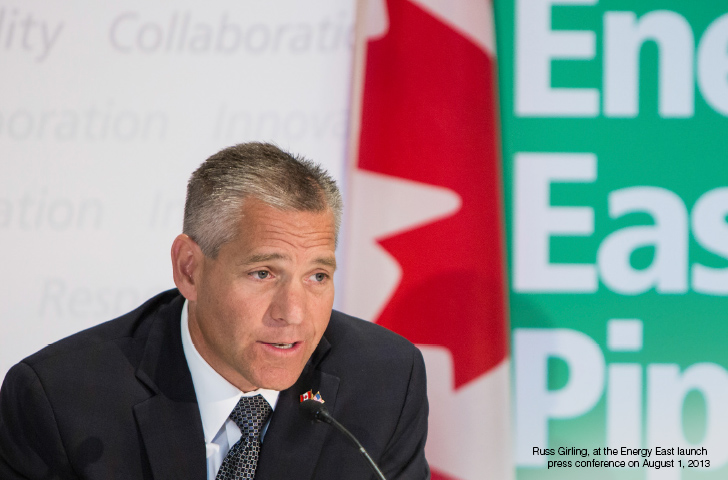
In reference to the results of the “Open Season,” an industry term inviting commercial interest in the pipeline, Russ Girling, TransCanada’s president and CEO. said, “This response confirms the overwhelming industry support for innovative solutions to move crude oil to markets in Eastern Canada and to elsewhere in the safest, most efficient means possible, which is in a pipeline.” He adds that Canadian refiners are eager for access to Western Canadian supply, as of most what they refine now is imported from overseas for the production of gas, diesel and other carbon-based fuels.
At the same time, TransCanada is reassuring residents of Ontario and Québec that they will continue to receive the natural gas they require, and that the cost of natural gas transmission in those provinces does not increase as a result of Energy East.

“Energy East will give new purpose to the underutilized capacity of our Mainline, making it more competitive and attractive for our natural gas customers,” say’s Girling. “We are committed to maximizing the utilization and benefits of our infrastructure for all customers –gas and oil–and we are committed to ensuring sufficient capacity is available to meet all their growing needs.”
Benefits of Energy East:
- Thousands of new jobs created (laborers, entrepreneurs, service industries, professionals).
- New revenues and business opportunities for entrepreneurs.
- Lower cost energy sources.
- Reduction on foreign oil dependency.
- Funded privately.
- Access for other Canadian production companies to tidewater for export.
Details of the Project:
- 3,000 km of Mainline will be converted between Burstall, SK, and Cornwall, ON.
- 1,500 km of new pipe constructed in AB, SK, MB, QB, and NB.
- Capacity to transport 1.1 million barrels of crude daily from Hardisty, AB, and SE Sask. terminal (not yet built) to serve eastern markets.
- Energy East will supply eastern refineries with a more reliable domestic supply of oil from Western Canada and will potentially replace more than 700,000 bbl/d of oil, of which 86% is currently imported oil from foreign countries like Saudi Arabia, Nigeria, Venezuela, and Algeria.
Altering the Landscape:
Approximately 180 First Nation and Métis communities currently live along the proposed pipeline route. According to Alex Pourbaix, president of Energy and Oil Pipelines, “these
residents, like all of our estimated 100,000 stakeholders on this project, will be consulted extensively about their concerns and their insights into local conditions and local circumstances … their advice will help us select the best possible route for this pipeline.”
Environment and Safety:
It seems one of the loudest cries heard inside all arenas within the energy industry is the environmental cry. TransCanada is doing its very best to assure all concerned that Energy East will work with all parties involved, while fielding all concerns as they relate to the pipeline. “Seventy percent of the needed pipe for the project is already in the ground and does not need to be dug up for this conversion to occur,” says Pourbaix.
TransCanada plans to replace existing compressor stations along the converted Mainline portion with pump stations. These pump stations will be powered by electricity and will have no direct emissions, meaning they will have minimal environmental impact –a consistent theme with Energy East.
Numerous studies have proven the safest way to transport oil is via a pipeline. In 2012 alone, TransCanada invested $1-billion in pipeline safety and integrity programs to ensure the safety of its assets and the environment in which they operate.
With broad support expressed for Energy East from politicians across the country and around the political spectrum, optimism for Energy East is high. Sound rationale aside, TransCanada as a corporation has a very large task ahead. The company plans to file its formal application for the project with the National Energy Board next year, with hopes that it will be able to begin construction on the pipeline in 2016, followed by service beginning in 2017 to Québec and 2018 to Saint John’s.
Energy East is just one of the $38-billion in pipeline and power generation projects underway for TransCanada. This ambitious company can only hope that its other big projects will receive such a congenial reception from Canadians.
Gdp Impact Of Project By Province (2013 $Millions) - Deloitte Study
|
Development and Construction
Phase (6 years) |
Operations Phase
(40 years) |
Combined |
| Ontario |
2,694 |
10,335 |
13,029 |
| Alberta |
1,742 |
6,128 |
7,870 |
| Quebec |
3,114 |
3,236 |
6,350 |
| New Brunswick |
1,170 |
1,629 |
2,799 |
| Saskatchewan |
577 |
1,980 |
2,557 |
| Manitoba |
361 |
1,446 |
1,807 |
| British Columbia |
244 |
396 |
640 |
| Others |
144 |
147 |
291 |
| TOTAL |
10,046 |
25,297 |
35,343 |
Total Government Tax Revenue, By Province (2013 $M) - Deloitte Study
|
Development and Construction
Phase (6 years) |
Operations Phase
(40 years) |
Combined |
| Ontario |
798 |
2,864 |
3,662 |
| Alberta |
463 |
1,734 |
2,197 |
| Quebec |
1,089 |
936 |
2,025 |
| New Brunswick |
194 |
627 |
821 |
| Saskatchewan |
266 |
428 |
694 |
| Manitoba |
111 |
505 |
616 |
| British Columbia |
59 |
82 |
141 |
| Others |
34 |
29 |
63 |
| TOTAL |
3,014 |
7,204 |
10,218 |
FTE Job Creation Per Year, By Province, Operations Phase - Deloitte Study
|
Operations Phase ( 40 years) |
| Direct |
Indirect |
Induced |
TOTAL |
| Ontario |
181 |
1,086 |
539 |
1,806 |
| Alberta |
418 |
200 |
261 |
879 |
| Quebec |
203 |
162 |
172 |
537 |
| New Brunswick |
121 |
205 |
59 |
385 |
| Saskatchewan |
70 |
126 |
69 |
265 |
| Manitoba |
94 |
97 |
56 |
247 |
| British Columbia |
0 |
37 |
63 |
100 |
| Others |
0 |
15 |
18 |
33 |
| TOTAL |
1,087 |
1,928 |
1,237 |
4,252 |
FTE Job Creation Per Year, By Province, Development And Construction Phase - Deloitte Study
|
Development Phase (3 years) |
Construction Phase (3 years) |
| Direct |
Indirect |
Induced |
TOTAL |
Direct |
Indirect |
Induced |
TOTAL |
| Ontario |
837 |
878 |
502 |
2,217 |
2,764 |
2,899 |
1,656 |
7,319 |
| Alberta |
528 |
854 |
500 |
1,882 |
1,743 |
2,819 |
1,652 |
6,214 |
| Quebec |
382 |
510 |
241 |
1,133 |
1,260 |
1,684 |
796 |
3,740 |
| New Brunswick |
332 |
407 |
129 |
868 |
1,095 |
1,344 |
427 |
2,866 |
| Saskatchewan |
159 |
215 |
76 |
450 |
524 |
711 |
250 |
1,485 |
| Manitoba |
104 |
97 |
52 |
253 |
343 |
320 |
170 |
833 |
| British Columbia |
0 |
116 |
88 |
204 |
0 |
383 |
390 |
673 |
| Others |
0 |
75 |
36 |
111 |
0 |
247 |
121 |
368 |
| TOTAL |
2,342 |
3,152 |
1,624 |
7,118 |
7,729 |
10,407 |
5,362 |
23,498 |
About TransCanada
TransCanada is a leader in the responsible development and reliable operation of North American energy infrastructure.
Natural Gas
- TransCanada moves 14 billion cubic feet (Bcf) of natural gas per day, (20% of North American total consumption), delivering to local distribution companies and businesses across Canada and the U.S.
- Network of approximately 68,500 km (42,500 mi.) natural gas pipelines connect virtually every major natural gas supply basin and market.
Gas Storage
- TransCanada is one of the largest developers of new storage facilities and providers of underground natural gas storage services in the U.S.
- Offer approximately 400 Bcf of natural gas storage capacity.
Power Generation
- Includes hydro, simple cycle, combined cycle, and natural gas-fired cogeneration plants.
- Plants across North America make innovative use of natural gas, cogeneration, and waste by-products, such as waste heat exhaust from nearby pipeline compressor stations.
Oil
- TransCanada has identified a unique opportunity to link the growing supply of Canadian crude oil with North America’s increasing demands for energy.
Did you enjoy this article?


 7 Questions That Can Transform The Energy East Pipeline
 Unlocking The Keystone XL
 Perplexing Pipe Problems: Public Policies and the Debate on Pipeline Construction
 The Northern Gateway Pipeline: Transporting Energy in a Transformative Direction
 Safety and Technology in Petroleum Pipelines